
The Prototype of Palladium Cross-Coupling Catalysts: Tetrakis(triphenylphosphine)palladium(0)
Updated: Sep 9
The illustrious legacy of Pd(PPh3)4 has cemented it as a cornerstone of catalytic cross-coupling reactions.
Tetrakis(triphenylphosphine)palladium(0), commonly known as Pd(PPh₃)₄, is perhaps the best-known catalyst for classical cross-coupling reactions and remains one of the most widely used palladium catalysts for Suzuki, Heck, Negishi, Sonogashira, and Stille cross-coupling reactions.
With thousands of references in the scientific literature, Pd(PPh₃)₄ is a workhorse of Pd(0)-catalyzed transformations and stands as the prototype upon which a diverse collection of palladium catalysts have been built. Despite the development of numerous specialized palladium precatalysts, Pd(PPh₃)₄ remains one of the most widely recognized and frequently utilized catalysts for cross-coupling chemistry.


Figure 1: The solid-state structure of tetrakis(triphenylphosphine)palladium(0) (XRD).
In the solid state, Pd(PPh3)4 adopts a tetrahedral geometry1, consistent with its 18-electron configuration (Figure 1). Though its homoleptic structure is relatively simple, the complex has been applied to an impressive variety of reactions. Among the most notable applications are cross-coupling reactions between aryl halides and transmetalating reagents, which were the subject of the 2010 Nobel Prize in Chemistry jointly awarded to Professors Negishi2, Suzuki3, and Heck4 (Figure 2). In addition, the Sonogashira5 and Stille6 coupling reactions utilize Pd(PPh3)4 to facilitate transmetalation reactions between alkynes and tin reagents.
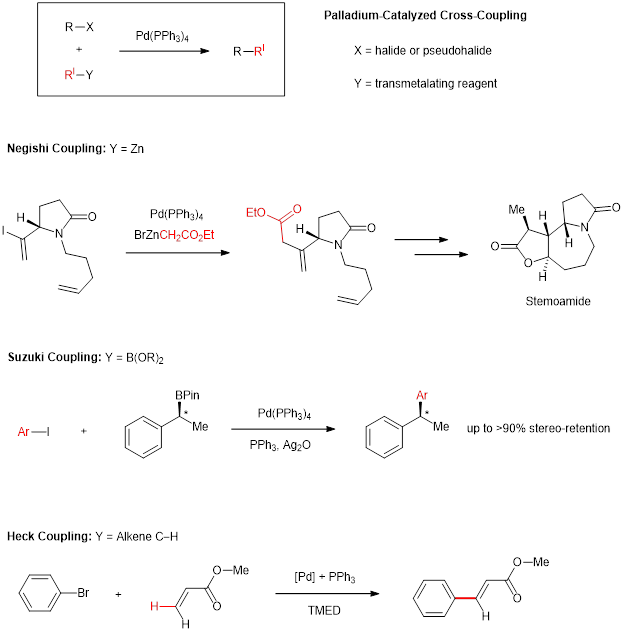

Figure 3: Top: Examples of accepted (left) and rejected (right) Pd(PPh3)4. Bottom: kilogram scale Tetrakis(triphenylphosphine)palladium(0), 99% (99.9+%-Pd) offered by Strem.
High-quality pure Pd(PPh3)4 exhibits a beautiful golden-yellow color (Figure 3). Low-quality or decomposed material, however, often shows a dark orange-brown color or, in extreme cases of decay, a dark greenish color. While analytical testing remains the definitive measure of quality, the appearance of Pd(PPh₃)₄ can provide a useful visual indicator of product integrity. From milligrams to kilograms, Strem offers tetrakis-triphenylphosphine palladium(0) with consistently high quality, and the complex continues to be an invaluable part of any synthetic organic chemist’s toolbox.
References:
1. Zh. Strukt. Khim 1976, 17, 135. CCDC deposition number 1275987
2. J. Org. Chem. 2007, 72, 4246.
3. J. Am. Chem. Soc., 2009, 131, 5024.
4. J. Am. Chem. Soc. 1974, 96, 1133.
5. Tetrahedron Lett. 1965, 16: 4467–4470.
6. Chem. Lett., 1977, 6, 301-302. Featured Product:
46-2150: Tetrakis(triphenylphosphine)palladium(0), 99% (99.9+%-Pd) (14221-01-3)


